The Line
Warning: This post may be very difficult to read.
They came the first time in mid-afternoon, when the light through the needles made everything look calm even when it wasn’t.
The sound arrived before the vehicles did. A low growl on the old road, weight moving where weight did not belong. In the Hollow, paths were made for feet, for sleds, for small carts pulled by stubborn humans. This sound was engine sound, deep and certain, as if the world still belonged to whoever could burn the most fuel.
Jun heard it from the bakery doorway and did not run. She set her hands on the flour bin, felt the vibration come up through the wood, and listened.
Mara stepped out of the longhouse and looked toward the stand. Rowan came to her side. Kairos was present in him, local and complete, sealed to the Stack and the Hollow alone. McDuff moved without hurry, positioning himself where he could see the widest, holster closed, hands empty.
The Hollow gathered. Not in a cluster. Not as a mob. They came in ones and twos from doorways and garden rows, from the cookhouse and the clinic, from the edge of the Yard where the sil-citizens lived and worked. They formed a line at the boundary where their dirt met the old road.
Open hands. Steady breath. No one shouted. No one pleaded. No one offered a speech for the drone.
The agents arrived masked. Not for weather. Not for dust. As intimidation. They moved in a wedge, armor and helmets and rifles carried low and threatening. There were more of them than Rowan expected. He felt the number register in his bones the way you feel pressure change before rain.
A drone rose above the tree line and hovered, a small eye that did not blink.
The lead agent stepped forward and spoke as if the forest belonged to him.
“Attention. Residents. This area is listed as unresponsive on regional monitoring. You will present yourselves for inspection.”
Mara did not step off the dirt. “We are here,” she said.
The agent’s head tilted, as if he was deciding whether to treat her as human or problem. “Identify your leader.”
Mara did not answer with a title. “We don’t have one.”
The agent’s voice sharpened. “You don’t have a leader. It’s a crime to lie to an officer of the state. It’s another crime to hide criminals from said officers. Present your leader!”
“We have each other,” Mara said.
There was a pause. It was not peace. It was calculation. The agent’s gaze tracked the line. Not weapons first. Weakness. The oldest. The smallest. The one who might flinch. His eyes passed over Mara, over Rowan, over Jun, and landed on Elara.
“You,” he said, pointing. “Step aside.”
Mara stepped into the space in front of Elara, quiet and immediate, like a body stepping under a falling branch. “No.”
The agent took one step forward. His boots did not yet touch their dirt. He wanted them to come to him. He wanted dominance to feel like compliance.
Jun watched his hand. She watched the gun hanging from his shoulder as if it were ordinary. She watched the drone hover above them, recording open palms and steady faces.
She could have hated them. She did not. Hate was a luxury. Hate made you loud. Hate made you legible.
She kept her hands open.
The lead agent tried again. “You are obstructing a lawful investigation.”
Jun heard the word lawful and felt something cold settle in her stomach. Lawful was the word people used when they wanted permission to hurt you without consequences.
Mara’s voice stayed level. “We are standing on our own land.”
The agents shifted. A baton tapped against a thigh plate. A gloved hand rose as if to gesture, then dropped. Someone laughed once, short and private, and Rowan felt the sound scrape across the line like sandpaper.
After a few more questions and a few more refusals, they left.
Not with apology. Not with shame. They withdrew in formation as if they could retreat from the fact that they had been forced to witness a line of people who did not kneel. The drone hovered longer than the vehicles did, staring down until even the birds went quiet. When it finally rose and drifted away, the Hollow did not celebrate.
They went back to work as if work could stitch the day closed.
Mara tightened the turbine housing with hands that did not need tightening any more than the turbine did. Rowan carried water and felt the old city logic in his muscles, the instinct to optimize, to anticipate, to submit before the blow landed. McDuff rolled the perimeter without theatrics, a dent in the path where a boot had struck too hard, a mark of contact on their dirt.
Jun baked late into the evening and gave everyone something warm to hold. Bread was not a weapon. Bread was a reminder. A small defiance you could eat.
Night came. The Hollow slept lightly. The stand blinked once at midnight, then went dark again.
Rowan woke before dawn with the sense that the first visit had been a question.
The second would be an answer.
They returned at dawn.
No loudspeaker this time. No warning. No attempt at the theater of procedure. The vehicles came in under the trees as far as they could manage, crushing brush, tearing a shallow trench in the path that had been made for feet. The sound of it was obscene in the morning stillness, like someone laughing in a chapel.
Jun had been awake before light. She had kneaded dough by feel, listening to the Hollow’s quiet and keeping her hands busy so her mind would not go where it always went when the world got loud. She baked because it was what she did when the air turned sharp and uncertain.
Bread was not a solution. Bread was a declaration.
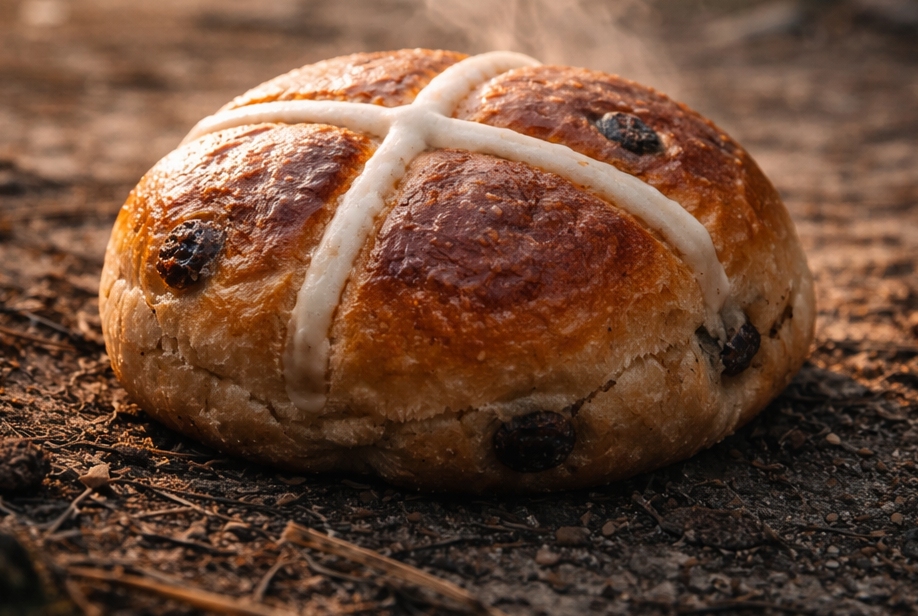
A tray of hot cross buns sat wrapped in cloth near the bakery door, warmth still trapped inside. The scent was spice and yeast and the faint sweetness of dried fruit. It was the kind of smell that made the body remember safety even when the mind refused.
Jun took one bun and walked toward the path. Not because she was naive. Because she was Jun.
The Hollow gathered again. Not in a cluster. Not as a mob. They came in ones and twos and formed the line at the boundary where their dirt met the old road.
Open hands. Steady breath. No one shouted. No one pleaded. No one offered a speech for the drone.
The agents arrived masked. Not for weather. Not for dust. For intimidation. They moved in a wedge, armor and helmets and rifles carried low and decidedly threatening.
A drone rose above the tree line and hovered, a small eye that did not blink.
The lead agent stepped forward and spoke as if the forest belonged to him. It was the same litany as the day before.
“Identify your leader.”
Mara did not answer with a title. “We don’t have one. We have each other.”
Jun stepped forward half a pace, not past Mara, just enough to be seen. She held out the bun in her bare hand. Steam rose faintly from the split crust. The cross cut into the top was visible even from here. A warm, human object in a scene built for fear.
“Would you like one,” Jun asked.
The agent reacted as if she had thrown something. His body snapped backward. His rifle came up in a single practiced motion and locked onto Jun’s hand.
“Drop it,” he shouted.
Jun froze. Not from fear. From confusion. She stared at her own hand as if she could not reconcile what she was holding with what he was seeing.
“It’s bread,” she said.
“Drop it,” he shouted again.
Mara’s voice stayed low. “She’s offering you food.”
The agent’s voice rose, tight with the kind of panic that wore authority like armor. “Back. Back or I will—”
Jun’s fingers tightened reflexively around the bun. A small human motion. A flinch. A nervous grip on warmth.
It was enough.
The gunshot cracked the morning.
Birds tore out of the trees as if the sky itself had been struck.
Jun looked down at her body as if it had become unfamiliar. The bun fell from her hand into the dirt, landing softly, absurdly intact. Then Jun folded, not slowly, not dramatically, like a curtain dropping.
Rowan caught her before she hit the ground. Her weight struck his arms heavy and wrong. Blood spread through her apron, dark and fast.
Mara dropped to her knees beside them and pressed both hands hard against the wound. Elara made a sound that wasn’t a word. McDuff rolled forward and stopped, body angled between the line and the rifles, holster closed, hands empty.
Rowan heard himself say, loud enough that it surprised him, “Medic.”
A resident near the back of the line broke formation and ran toward the clinic. A teenager stepped into the gap they left without looking back. Another resident stepped into that gap. The line held.
The agents advanced.
Mara looked up from Jun’s blood and spoke clearly into the cold morning. “This is who you are.”
The words were not anger. They were diagnosis.
The lead agent’s rifle lifted again and his eyes found Hollis at the far end of the line, the older man with the cane, shoulders trembling with the effort of staying upright.
The cruelty was methodical. It always hunted the edge.
Three residents stepped forward at once, absorbing Hollis back into the group. A young woman with a baby strapped to her chest. Two teenagers, shoulders squared. Hollis was no longer the edge.
The lead agent swore and shoved one of the teenagers hard enough that they stumbled. The teenager caught themselves and did not swing back. They stepped forward again.
The agent’s gloved hand moved toward the baby’s chest strap. The young woman shifted her body, turning the baby inward, and another adult stepped forward to fill her space. Then another. Then another. A quiet cascade of bodies drawing the fire.
Not one hero. A system.
The agent struck the adult who had stepped forward. A baton, quick and cruel. The adult went down on one knee, pain flashing through their face. Before the agent could savor it, someone else stepped into the gap. The kneeling adult rose and moved to the back without argument, supported by two hands on their elbows.
The drone hovered above them, recording open hands and steady faces and a bun in the dirt.
One agent swung a rifle butt toward McDuff’s chest. McDuff did not strike back. He held. The butt connected with a dull metallic sound. McDuff rocked back a fraction, then steadied. A small dent appeared in his casing.
Mara leaned close to Jun, her voice low enough that only Jun could hear. “You did nothing wrong.”
Jun’s eyes softened. She blinked slowly. Then her gaze slid past them and her body went slack.
Rowan made a sound he had not made since childhood, an animal sound, broken and shameful and true.
The agents withdrew after that, backing away in formation as if they could retreat from what they had done. The vehicles turned and left, engines roaring, tearing the road again, dragging their violence away like a stain they intended to spread elsewhere.
When the sound was gone, the Hollow did not cheer.
They knelt in the dirt beside Jun. Hands touched her shoulders, her hair, her arms. Someone picked up the bun and set it gently on a flat stone beside the path, as if it were still an offering.
They carried Jun to the longhouse and laid her on the table where bread was usually kneaded and apples were usually sliced. They washed the blood with water that tasted like iron in Rowan’s mouth. Someone wrapped Jun’s body in a clean cloth. Someone lit candles at her head and feet.
The room went quiet except for breathing and the occasional sound of a body failing to keep its grief inside.
Hollis’s hands trembled uncontrollably. McDuff stood dented near the door, optics dimmed a fraction. Elara sat on the floor, knees pulled to her chest, shaking, eyes raw and wide.
Rowan opened the Stack case.
The hum that rose was small and intimate. No broadcast. No global chorus. Just stored capacity, waiting to be used with care.
Kairos did not offer miracles. Kairos offered what he had.
He helped Mara triage the wounded, mapping what could be treated with their supplies and what could only be stabilized. He helped McDuff fabricate a brace. He helped the clinic crew improvise splints, sterilize tools, ration antiseptic with ruthless honesty.
He did the quiet work of turning panic into sequence. He gave the survivors something their bodies could follow when their minds were drowning.
Later, after the wounds were dressed and the children were gathered under blankets with trusted hands around them, Rowan sat with Mara at the table.
“We stood,” Rowan said. He did not know if it was a question or an accusation or a prayer.
“Yes,” Mara said.
“And they killed her anyway.”
“Yes,” Mara said again, steady as stone.
Rowan felt his throat close. “How do we keep doing this.”
Mara’s gaze did not flinch from his. “We stand so they cannot make us kneel,” she said. “We stand so our children learn what bravery looks like. We stand so we do not become them.”
Outside, the world was still burning.
Inside, the Hollow began to do what it always did.
It repaired what could be repaired. It buried what could not. And it taught the living how to stand again.



Member discussion